
by Ali Rind, Last updated: July 16, 2026
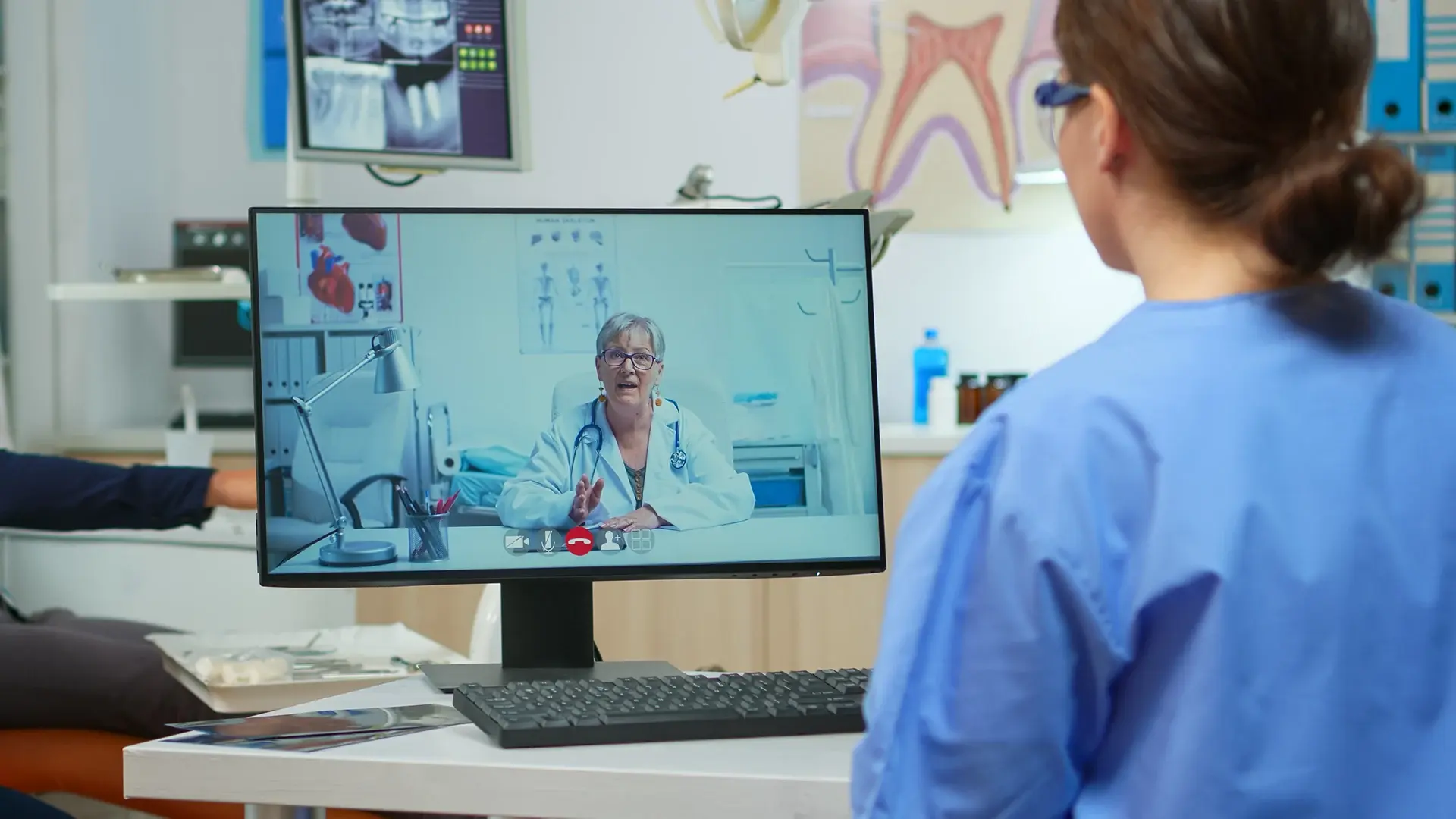
Most organizations evaluating VCreate are not doing the workflow VCreate was built to handle. They are reviewing video across affiliate sites for program fidelity. They are distributing training across regional offices. They are running supervisory QA on recorded sessions submitted by clinicians-in-training. They are managing video across an HQ with dozens of independently operated sites.
VCreate was not built for any of those use cases. It was built for asynchronous clinical video between patients and clinicians inside hospital systems with EHR integration. The platform is good at that workflow. It is the wrong platform for almost everything else.
Most buyers do not figure out the difference until mid-evaluation, after they have already invested in vendor demos and built internal momentum around a shortlist. This piece is for the buyer trying to make that distinction before signing a contract. For the broader context of how multi-site video governance fits into a managed enterprise program, see our guide on video content management systems.
Where Most Buyers Get Stuck
The pattern shows up consistently across healthcare-adjacent organizations evaluating clinical video platforms.
A multi-site program shortlists VCreate because the platform has healthcare credentials, NHS adoption, and clinical positioning. The credentials are real. The compliance certifications are real. The positioning is real.
What the buyer misses is that VCreate's entire architecture assumes a single hospital with an EHR sending video between clinicians and patients. The buyer's actual workflow is something else entirely: video from external sites flowing into a central review queue, structured ratings against a fidelity rubric, retention policies that destroy the video while preserving the rating data, and per-site isolation so reviewers see only the affiliates they are assigned to.
By the time the buyer realizes the gap, two demos have already happened, internal stakeholders are anchored on VCreate as the leading option, and the question "is this actually the right fit" feels harder to ask than it should. The cost of switching evaluation direction late in the process is what keeps wrong-fit decisions moving forward.
The fix is to ask the workflow-fit question first, before the credential question.
What VCreate Is Actually Built For
VCreate's strength is narrow and specific: hospital clinicians making diagnostic decisions from patient-submitted asynchronous video. EHR integration is the architectural center. SMART on FHIR connects video referrals directly to the patient record. Compliance posture covers HIPAA, PIPEDA, NHS Cyber Essentials, ISO 27001, and DTAC.
If the workflow is patient-to-clinician video flowing into an EHR for diagnostic decisions, VCreate handles it well. If the workflow is anything else, the architectural assumptions stop helping and start blocking.
Where VCreate Falls Short for Multi-Site Review Workflows
Five gaps appear consistently when organizations try to use VCreate outside its intended workflow.
No multi-tenant affiliate distribution model
VCreate is built for a single hospital system. Organizations with an HQ-and-affiliate structure where dozens of separate sites upload videos to a central reviewer need a different architecture, with each affiliate site getting its own portal, its own user scope, and its own audit boundary.
No reviewer workflows with structured forms
Clinical fidelity monitoring requires time-stamped observations, adherence checklists, and rating data that persists after the video itself is destroyed. VCreate's clinical-diagnosis workflow centers on a clinician forming a free-form assessment, not on a reviewer marking checkpoints against a rubric while watching.
No AI search across video libraries
Cross-content semantic search across spoken words, on-screen text, and detected objects is absent. For a multi-site program reviewing hundreds of videos for specific procedures or topics, that absence forces reviewers to watch each video end-to-end.
Built around EHR integration that non-hospitals do not have
SMART on FHIR is the backbone of VCreate's architecture. Children's mental health agencies, family services organizations, evidence-based program licensors, and healthcare-adjacent non-profits do not operate EHRs. The integration value that makes VCreate compelling for hospital buyers is irrelevant for these organizations' use cases.
Narrow product scope
VCreate is a clinical video repository, not a broader enterprise video platform. Training distribution, internal communications, knowledge management, and supervisory review live outside its scope. Organizations whose video needs extend beyond patient-clinician sessions end up running VCreate alongside additional platforms.
Five VCreate Alternatives for Different Use Cases
The right alternative depends on the actual workflow. Five platforms, each best for a different shape of need.
1. VIDIZMO EnterpriseTube
1. VIDIZMO EnterpriseTube
Best for: Enterprise video management end-to-end, including multi-site clinical program review, fidelity monitoring, affiliate workflows, corporate training, internal communications, on-demand streaming, and live events.
EnterpriseTube is a full enterprise video platform that handles the entire content lifecycle. The same platform supports town halls, training libraries, corporate communications, on-demand streaming, live broadcasts, and knowledge bases, alongside specialized workflows like multi-site clinical review that most competitors do not address well.
For the affiliate review use case, the platform fits the workflow directly. Sites upload video through unique external links without needing user licenses. Videos land in a central review queue where assigned reviewers work through them against in-video forms with structured ratings, time-stamped observations, and fidelity checklists. Form data exports to CSV or PDF and persists after the source video is destroyed under the configured retention policy. AI search spans spoken words, on-screen text, faces, and detected objects across the entire library. Multi-tenant permissions give each affiliate site its own portal, audit log, and user scope.
The platform also covers VOD streaming at scale, live event delivery with eCDN integration, AI transcription and translation across 40+ languages, automated chaptering and summarization, SCORM and LTI integration with major learning management systems, and pre-built connectors for Microsoft Teams, Zoom, Webex, and SharePoint.
Compliance: ISO 27001:2022 certified directly. Supports HIPAA-compliant deployments. PIPEDA support via Canadian data residency in the Azure Commercial Canada region. Helps organizations meet GDPR data protection requirements. Deployed on SOC 2 Type II certified Azure infrastructure.
Deployment: SaaS, dedicated cloud, on-premises, private cloud, hybrid, government cloud, and air-gapped deployment, with Canadian data residency available.

2. Kaltura
Best for: General enterprise video portal with a strong API and integration ecosystem.
Standout capabilities: Extensive 900+ API and SDK surface. Modular product structure covering webcasting, webinars, virtual classroom, and OTT in one suite. Deep LMS integration with Canvas, Moodle, Blackboard, and Brightspace.
Limitation: No vertical-specific clinical positioning or healthcare-credentialed deployment story. Multi-tenant affiliate workflows are achievable through configuration but are not the primary use case the platform targets. Pricing complexity and customization-via-developers can slow deployment for organizations without dedicated engineering resources.
3. Brightcove
Best for: Large-scale video streaming, marketing video, and broadcast-style distribution.
Standout capabilities: Mature streaming infrastructure with strong CDN performance. Established player technology. Monetization features for organizations selling video access.
Limitation: Not built for clinical workflows. Consumer-broadcast DNA shows in the absence of multi-site affiliate governance and structured review features. Clinical compliance documentation is limited. Organizations evaluating Brightcove for clinical or supervisory use cases typically find the gap between the demo and the actual workflow widens as evaluation progresses.
4. Panopto
Best for: Education, lecture capture, and corporate training where recording instructor-led content is the main workflow.
Standout capabilities: Strong classroom and lecture recording tools. Good search across recorded lecture content. Deep LMS integration for higher education.
Limitation: Weak on multi-site distribution patterns where each site needs its own portal, branding, and audit scope. Limited clinical compliance positioning compared to platforms with explicit healthcare credentials. The platform's center of gravity is education, not multi-organizational clinical program review.
5. Vimeo Enterprise
Best for: Organizations with light video governance needs and small user bases.
Standout capabilities: Clean ad-free video player, broad brand familiarity, and eCDN integration with Hive and Kollective at the Enterprise tier.
Limitation: Vimeo was acquired by Bending Spoons for $1.38 billion in November 2025, followed by mass layoffs in January 2026 that affected the majority of staff including the video engineering team. This introduces real uncertainty about enterprise support continuity and long-term product direction. Weak on data residency, multi-tenant permissions, in-video forms, and clinical compliance. Pricing scales poorly for high-user-low-frequency affiliate models.
Common Buyer Mistakes
Three patterns show up repeatedly when organizations short-list the wrong clinical video platform.
Shortlisting based on healthcare credentials without checking the underlying workflow assumption. ISO 27001 certification, NHS adoption, and HIPAA compliance are real, but they answer the security and compliance questions, not the workflow-fit question. A platform can be fully compliant and still wrong for your use case. Teams replacing a legacy system often discover this gap during a proof of concept, which is one of the patterns covered in our guide on replacing an in-house video portal.
Assuming a clinical-video platform handles multi-site review. Most clinical platforms are built around the single-hospital model. Multi-tenant architecture is rare in the clinical-video category and usually has to come from the broader enterprise-video category instead.
Underestimating the difference between EHR-integrated and standalone deployment models. Hospitals running an EHR get clear value from SMART on FHIR integration. Non-hospital organizations get no value from it, because the integration target does not exist in their environment. Vendors built around EHR integration assume buyers have an EHR.
People Also Ask
VCreate is a clinical video repository for patient-to-clinician video inside hospitals with EHR integration. EnterpriseTube is a full enterprise video platform that handles multi-site clinical review, training, internal communications, on-demand streaming, and live events on a single system with multi-tenant architecture and AI search across libraries.
VCreate is built around EHR integration via SMART on FHIR. Non-hospital organizations like behavioral health agencies and family services nonprofits do not run EHRs, so the integration value is irrelevant and a broader enterprise video platform usually fits better.
VCreate's architecture is single-tenant hospital-internal. It has no native HQ-and-affiliate model with separate site permissions, audit boundaries, and per-affiliate branding. Multi-affiliate organizations typically need a multi-tenant enterprise platform.
EnterpriseTube is the closest fit. Multi-tenant permissions, in-video forms with exportable response data, AI search across the library, configurable retention, and link-based affiliate upload all match the fidelity-monitoring pattern, while the same platform also supports the organization's training and communications use cases.
VCreate is built for free-form clinical diagnosis. Structured rating forms, time-stamped fidelity checklists, and exportable response data are not native. Organizations needing structured review workflows usually choose a platform designed for that pattern.
Yes, an enterprise video platform like EnterpriseTube covers training distribution, internal communications, on-demand streaming, live events, and knowledge management on the same system that handles multi-site clinical review. Organizations do not need a separate platform for each workflow.
PIPEDA is the federal baseline, with PHIPA applying to Ontario health-sector organizations and similar provincial laws elsewhere. Canadian data residency, ISO 27001 certification, and HIPAA-compliant deployment options are standard expectations for clinical video platforms serving Canadian organizations.
About the Author

Jump to

Is Vimeo HIPAA Compliant? Vimeo vs EnterpriseTube for Healthcare Video

PHIPA-Compliant Video for Children's Mental Health and Family Services


No Comments Yet
Let us know what you think