
by Rafay Muneer, Last updated: March 30, 2026
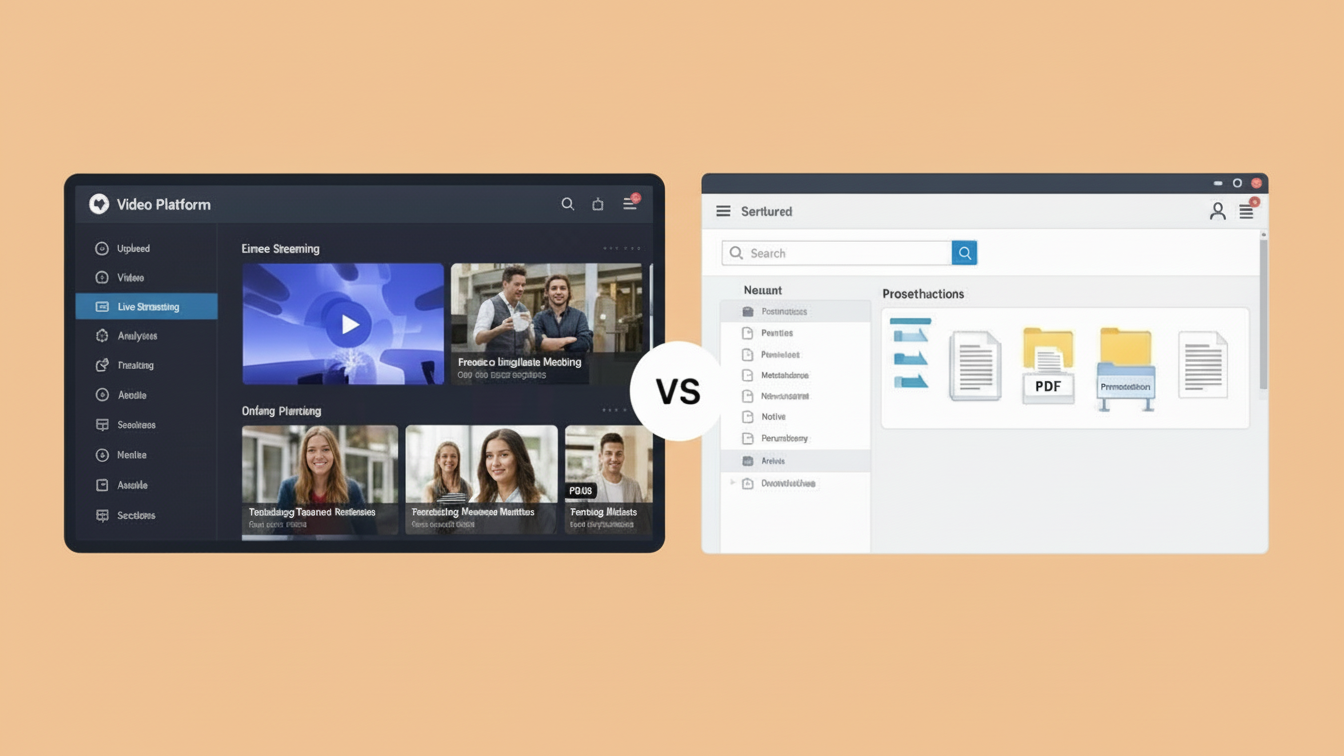
Organizations use video to capture knowledge that rarely exists in documents. Meetings, investigations, expert briefings, and internal discussions often live only in recorded form. As this content grows, teams struggle to decide where it belongs.
This is where confusion starts. Enterprise video platforms and knowledge management systems both promise better access to information. They solve different problems, yet their roles increasingly overlap as video becomes a primary knowledge source.
Enterprise video platforms focus on secure video storage, governance, and discovery. Knowledge management systems focus on organizing and sharing institutional knowledge across formats. When video sits at the center of knowledge workflows, the distinction matters.
For IT and knowledge leaders, choosing between an enterprise video platform and a knowledge management system is not about replacing one with the other. It is about understanding how each supports knowledge access, governance, and scale.
This guide explains the differences between enterprise video platforms and knowledge management systems and helps organizations decide how to use them effectively together.
What Enterprise Video Platforms Are Designed For
Enterprise video platforms are built to manage video as a secure enterprise asset. Their primary role is to store, protect, and make video content usable across the organization while maintaining control and governance.
These platforms centralize video storage and apply consistent access policies. Administrators manage permissions, retention rules, and audit logs from a single system. This is essential when video includes sensitive discussions, legal evidence, or regulated content.
Search and discovery are core capabilities. Enterprise video platforms use AI to transcribe, index, and analyze video. Users can search spoken words, jump to exact moments, and understand content through summaries and chapters.
Enterprise video platforms also support operational workflows. They integrate with identity systems, intranets, and case management tools. Deployment options such as cloud, on prem, and hybrid ensure alignment with security and compliance needs.
In short, enterprise video platforms focus on making video secure, searchable, and governable at scale.
What Knowledge Management Systems Are Designed For
Knowledge management systems are built to organize and share information across an organization. Their goal is to help teams capture institutional knowledge and make it easy to find and reuse.
These systems typically manage documents, articles, guides, FAQs, and structured data. Content is organized through taxonomies, categories, and workflows designed for collaboration and reuse.
Knowledge management systems focus on consistency and context. They support version control, approvals, and publishing processes. This helps ensure information stays accurate and current.
Search in knowledge management systems works best with structured and text based content. While some platforms support multimedia, video is often treated as an attachment or external link rather than a primary knowledge source.
Knowledge management systems work well when knowledge can be documented clearly. They struggle when insight lives inside conversations, recordings, or unstructured media.
Enterprise Video Platforms vs Knowledge Management Systems: Key Differences
Enterprise video platforms and knowledge management systems overlap in purpose, but they differ in how they handle content, governance, and discovery.
Primary Content Type
An enterprise video platform is built for video first. It manages recordings, live streams, and video libraries as primary content.
A knowledge management system is built for text and structured knowledge. It manages articles, documents, and curated guidance as primary content.
How Knowledge Gets Captured
Enterprise video platforms capture knowledge passively through recordings. Teams record meetings, briefings, and field activity, then the platform turns that content into searchable information.
Knowledge management systems capture knowledge intentionally. Someone writes, edits, and publishes content so others can use it later.
Search and Discovery
Enterprise video platforms rely on AI transcription, indexing, summaries, and chaptering to make video searchable. Users find information inside recordings and jump to relevant moments.
Knowledge management systems rely on structured text, metadata, and taxonomy. Users search titles, tags, categories, and full text articles.
Governance and Compliance
Enterprise video platforms focus on media governance. They enforce access control, audit logs, retention policies, and secure sharing for video content.
Knowledge management systems focus on content governance. They support approvals, version control, publishing workflows, and knowledge lifecycle management for documents and articles.
Integration and Usage Patterns
Enterprise video platforms integrate with identity systems, intranets, portals, and operational tools where video is consumed.
Knowledge management systems integrate with help desks, intranets, and collaboration tools where users read and reuse curated information.
When to Use Both Together
Most organizations get the best results when they combine an enterprise video platform with a knowledge management system. Each handles a different part of the knowledge lifecycle.
Use an enterprise video platform to capture and govern raw knowledge at scale. This includes meetings, interviews, compliance briefings, field recordings, and internal communications. AI transcription, summaries, chaptering, and search help users extract value from recordings without manual effort.
Use a knowledge management system to turn key information into reusable guidance. This includes policies, standard operating procedures, troubleshooting steps, and approved answers. Structured text makes knowledge easier to standardize and keep current.
A practical workflow looks like this.
-
Teams record sessions and store them in the enterprise video platform.
-
The platform generates transcripts, summaries, and chapters so teams can review content quickly.
-
Subject matter experts convert key insights into articles or procedures inside the knowledge management system.
-
The knowledge management system links back to the source video for context and evidence.
This approach prevents knowledge loss. It also reduces the burden of forcing teams to document everything manually while keeping critical knowledge organized and controlled.
How EnterpriseTube Bridges Video and Knowledge Management
EnterpriseTube helps organizations treat video as a first class knowledge source while keeping it secure and governed. It fits alongside a knowledge management system and strengthens it by turning video into searchable, structured information.
EnterpriseTube captures knowledge from real work. Teams can store recordings from meetings, briefings, interviews, and operational sessions in a centralized library. Instead of leaving video as a long file no one revisits, EnterpriseTube applies AI to make it usable.
Key EnterpriseTube capabilities that support knowledge workflows include:
-
Transcription that converts speech into searchable text
-
Summaries that give quick context for long recordings
-
Chaptering that breaks videos into clear sections for faster navigation
-
AI powered search across transcripts and metadata to find specific answers
-
AI chatbot based on retrieval augmented generation, so users can ask questions and get responses grounded in approved video content
-
Strong access control, audit logs, and retention rules to keep knowledge secure and compliant
-
Flexible deployment options, cloud, on prem, hybrid, and private cloud, to match IT policies and data residency needs
EnterpriseTube does not replace a knowledge management system. It strengthens knowledge programs by making video easier to find, review, and reuse. Teams can link EnterpriseTube videos inside knowledge bases, intranets, and portals so users get both quick answers and supporting context.
Conclusion
Enterprise video platforms and knowledge management systems solve different problems, but they work best together. As more knowledge lives inside conversations and recordings, organizations need a way to capture and govern video without losing structure.
Enterprise video platforms focus on securing, indexing, and governing video at scale. Knowledge management systems focus on organizing curated information for reuse. One captures knowledge as it happens. The other refines and distributes it.
EnterpriseTube helps bridge this gap by turning video into searchable, structured knowledge while maintaining enterprise grade security and control. When paired with a knowledge management system, it allows organizations to preserve insight, reduce knowledge loss, and improve access across teams. Try it out today.
Key Takeaways
-
Enterprise video platforms and knowledge management systems serve different roles.
-
Video platforms capture and govern knowledge stored in recordings.
-
Knowledge management systems organize curated, text based information.
-
AI helps convert video into searchable and usable knowledge.
-
Using both together prevents knowledge loss and improves reuse.
-
EnterpriseTube strengthens knowledge programs by making video a searchable knowledge source.
About the Author
Jump to

Enterprise Video Platform vs Video Hosting, What IT Teams Need to Know About the Difference

Replacing Legacy Enterprise Video Platforms For Your Organization: A Buyer Checklist


No Comments Yet
Let us know what you think