
by Nohad Ahsan, Last updated: December 22, 2025

Enterprise video content grows fast across training, meetings, marketing, and compliance. Without strong integrations, video files end up scattered across tools, teams, and storage systems. Enterprise video integrations solve this by centralizing video content, automating workflows, and enforcing security and compliance across the enterprise.
Let’s be honest—managing video content in an enterprise is chaotic. It starts small, just a few training sessions and marketing videos. But soon, it spirals into a disorganized mess of scattered videos stored across different platforms, leading to productivity drains, security risks, and compliance challenges.
According to a report by Gartner, 60% of enterprises struggle with fragmented video storage, leading to productivity losses and increased security risks. Imagine the frustration of an IT manager or marketing head who can’t find the latest training video or product demo amidst this chaos. The impact? Missed deadlines, compliance nightmares, and wasted resources.
But here’s the good news: It doesn’t have to be this way. The answer lies in powerful video integrations within an Enterprise Video Content Management (EVCM) system. By seamlessly connecting your video assets with existing enterprise tools, you can streamline workflows, enhance security, and transform video content into a strategic business asset.
Ready to eliminate the chaos and maximize the potential of your video content? Let’s dive in.
The Real Problem With Enterprise Video Content
Video plays a central role in enterprise operations. Teams rely on it for onboarding, training, sales enablement, internal communication, and regulatory compliance. Yet most organizations manage video across disconnected tools, shared drives, and third party platforms.
This creates four persistent problems.
Fragmented Storage
Videos live across cloud drives, collaboration tools, emails, and personal folders. Employees waste time searching. Teams reuse outdated versions. Sensitive files end up in unsecured locations.
No Unified Search or Version Control
Without a centralized system, enterprises lose visibility. Employees struggle to locate approved videos. Multiple versions circulate without clear ownership or governance.
Security and Compliance Risk
Enterprise videos often include personal data, confidential discussions, or intellectual property. When videos bypass secure systems, organizations face exposure under GDPR, HIPAA, SOX, and internal security policies.
Manual and Inefficient Workflows
Uploading the same video across platforms wastes time. Manual tagging and tracking introduces errors. Reporting on usage and compliance becomes slow and unreliable.
These issues scale with content volume. As video usage grows, the cost of disorganization grows with it.
Real-World Consequences of Disorganized Video Management
These aren’t just hypothetical situations—they’re daily occurrences in enterprises that lack a unified Enterprise Video Content Management System (EVCM). The consequences of ignoring these problems are severe:
- Missed Deadlines: Inability to find or access the latest version of video content leads to delayed launches, missed marketing opportunities, and frustrated teams.
- Security Breaches: Sharing videos through unsecured channels exposes sensitive information to unauthorized access, increasing the risk of data breaches.
- Regulatory Non-Compliance: Without audit trails and secure storage, compliance officers struggle to demonstrate adherence to regulations like GDPR, HIPAA, and SOX, leading to costly fines and legal repercussions.
- Reduced Productivity: Employees spend countless hours searching for videos, leading to operational inefficiencies and decreased productivity.
According to a 2023 report by Forrester, enterprises lose up to 30% of their productivity due to disorganized digital assets, including videos. The cost of this inefficiency isn’t just monetary—it impacts employee morale, customer satisfaction, and brand reputation.
The Power of Enterprise Video Integrations
The challenges of managing video content within large enterprises can be overwhelming. However, the good news is that there is a way out of this video content chaos. It starts with leveraging powerful video integrations through an enterprise-grade Video Content Management System (VCMS) that centralizes, secures, and optimizes your video workflows.
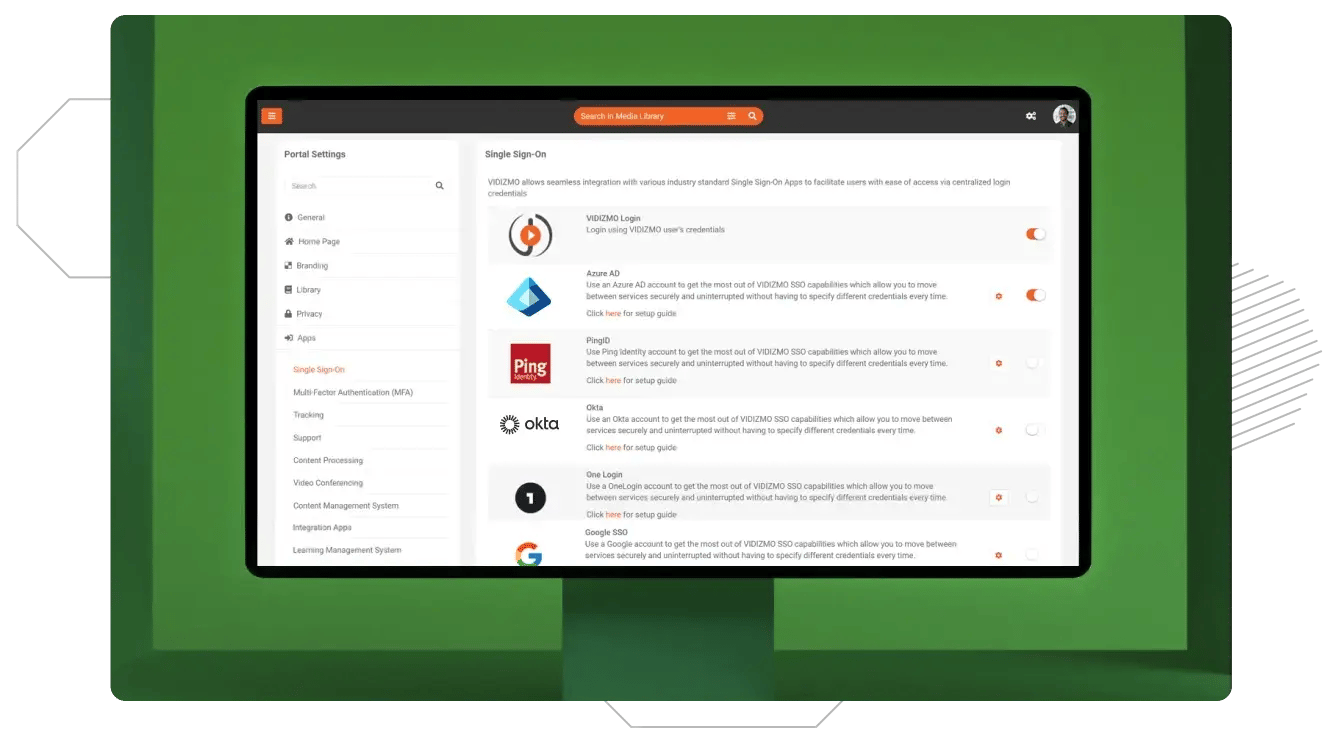
Here’s how powerful integrations can turn your disjointed video content into a well-oiled machine:
Centralized Video Storage and Unified Access
Imagine having every video your organization creates, whether it’s a training session, marketing material, or corporate presentation, stored in a single, secure, centralized platform. This eliminates the challenges of scattered storage and manually searching videos.
Integrated video platforms store all enterprise videos in one secure system. This removes dependence on scattered drives and third party uploads.
Key outcomes include:
-
Role based access for departments and users.
-
A single source of truth for each video.
-
Faster discovery through unified search and metadata.
Centralization improves productivity while reducing risk.
With enterprise video content management systems, all your videos are organized and accessible through one platform. This doesn’t just simplify storage; it enables you to:
- Control Access: Assign user-based permissions to ensure the right people have access to the right content.
- Eliminate Redundancy: By centralizing all your video content, you eliminate the risk of multiple versions floating around your organization.
- Increase Productivity: Employees spend less time searching for content and more time using it effectively.
Seamless Integrations with Enterprise Tools
Perhaps the most valuable aspect of enterprise VCMS platforms is their ability to integrate seamlessly with your existing enterprise tools, from your Learning Management System (LMS) to your Customer Relationship Management (CRM) platform and beyond.
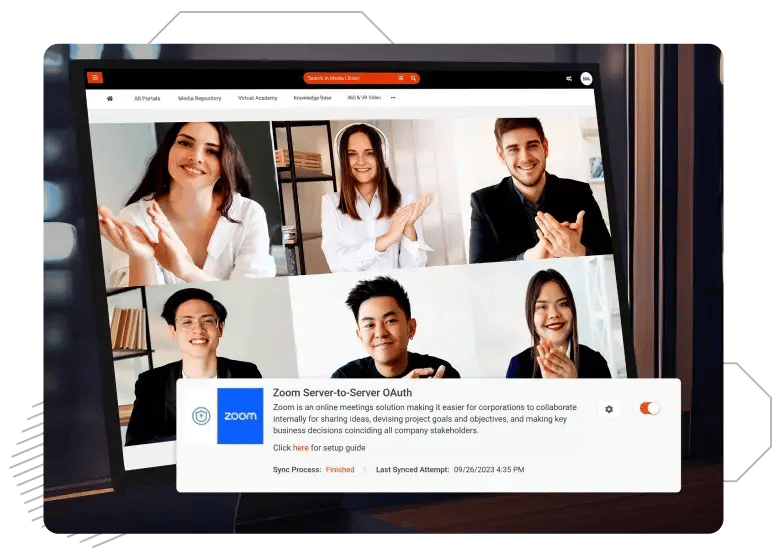
These integrations streamline workflows by allowing your teams to access and share video content directly through the platforms they already use.
- For Training and Onboarding: Integrating with your LMS means training videos can be assigned, tracked, and reported in the same system where other learning materials are housed. Corporate trainers and HR teams can easily upload, track engagement, and measure the effectiveness of video-based learning programs.
- For Marketing and Sales: With CRM integrations, marketing teams can upload video content to the VCMS and seamlessly share it with sales teams or clients via the CRM. This ensures brand consistency and provides detailed engagement analytics.
- For Compliance: Integrating video content with compliance tools ensures videos remain secure, auditable, and compliant. This reduces the risk of leaks, makes audits easier, and ensures that your organization meets regulatory standards like GDPR or HIPAA.
Enhanced Security and Compliance
Security is non-negotiable when it comes to managing video content within an enterprise, especially when it involves sensitive internal communications, confidential product demos, or videos containing personally identifiable information (PII). A secure VCMS not only provides encryption and access control but also ensures compliance by generating detailed audit trails so you can track exactly who viewed or downloaded a particular video.
With enterprise-grade security integrations, you’ll be able to:

- Restrict Access: Assign permissions based on roles, departments, or individual users.
- Track Activity: Get detailed reports on video usage so you always know who’s watched what, when, and for how long.
- Ensure Compliance: Easily demonstrate compliance with regulations like GDPR, HIPAA, and SOX through built-in compliance tracking and audit trails.
This level of control gives compliance officers peace of mind while ensuring your organization is fully prepared for audits and security checks.
Automation and Efficiency Through Workflow Integration
Manually uploading, distributing, and tracking video content is time-consuming and error-prone. Video integrations remove these bottlenecks by automating repetitive tasks, freeing up time for your team to focus on more strategic initiatives.
Automation not only increases efficiency but also minimizes human error, ensuring that videos are always where they need to be when they need to be.
Scalability for Growing Video Libraries
As your organization grows, so does your video content. Without the proper infrastructure in place, managing an ever-expanding video library becomes a logistical nightmare. However, with a scalable VCMS, growing pains can be avoided entirely.
Here’s how video integrations make scalability painless:
- Cloud Storage Integration: Enterprise VCMS solutions that integrate with cloud platforms (like Azure, AWS, or Google Cloud) allow you to scale storage quickly as your video library grows.
- Distributed Access: With cloud integrations, your teams can access video content from anywhere in the world without sacrificing performance or security.
- Cost Optimization: By optimizing how videos are stored and distributed, your organization can scale video production and usage without ballooning costs. CIOs and IT Managers can maintain control over resources while expanding their video capabilities.
Scalability becomes a strength, not a challenge, allowing you to meet your business's evolving needs without missing a beat.
Transforming Video Management with Powerful Integrations
Efficient video content management is no longer a luxury—it's a necessity for enterprises aiming to stay competitive. By integrating powerful video solutions within an Enterprise Video Content Management System (VCMS), businesses can streamline workflows, enhance security, and ensure compliance. These integrations enable seamless access, centralized storage, and automated processes that eliminate bottlenecks and improve productivity.
Don’t let disorganized video content hold your business back. Embrace the power of video integrations to optimize your enterprise’s video strategy. Ready to revolutionize your video management? Explore our AI-Powered VCMS Today or Request a Free Trial to experience seamless integration and enhanced productivity.
People Also Ask
What is an Enterprise Video Content Management System (VCMS)?
An Enterprise Video Content Management System (VCMS) is a platform designed to store, manage, and distribute video content securely and efficiently across an organization. It centralizes video storage, enhances searchability, and integrates with existing enterprise tools like LMS, CRM, and CMS platforms to streamline workflows and improve productivity.
How do video integrations enhance enterprise productivity?
Video integrations connect video content with the tools employees already use, such as learning management systems (LMS), customer relationship management (CRM) platforms, and compliance tools. This eliminates manual tasks, streamlines workflows, and automates video distribution, saving time and boosting productivity.
Why is security important in enterprise video content management?
Security is crucial in enterprise video content management because videos often contain sensitive information such as employee data, intellectual property, and compliance-related content. VCMS platforms offer enterprise-grade security features like encryption, access control, and audit trails to ensure data security and regulatory compliance.
How can video integrations help with compliance and auditing?
Video integrations with compliance tools help enterprises securely store and track video usage, ensuring compliance with industry regulations like GDPR, HIPAA, and SOX. They provide audit trails and detailed reports that simplify compliance audits and demonstrate adherence to regulatory standards.
Can video integrations improve employee training and onboarding?
Yes, video integrations with learning management systems (LMS) streamline employee training and onboarding by delivering video-based learning materials efficiently. These integrations enable HR teams to track engagement, measure learning outcomes, and ensure employees complete necessary training modules seamlessly.
What are the benefits of centralized video storage?
Centralized video storage eliminates fragmented storage systems and provides a unified platform for managing all enterprise videos. It improves searchability, enhances security through role-based access controls, and reduces redundancy by maintaining a single version of each video.
How do video integrations support marketing and sales teams?
Video integrations with CRM and marketing automation tools allow marketing teams to distribute branded content across multiple platforms effortlessly. These integrations provide engagement analytics, helping marketers optimize campaigns for better reach, engagement, and ROI.
What tools can be integrated with an Enterprise VCMS?
An Enterprise VCMS can integrate with a variety of enterprise tools, including Learning Management Systems (LMS), Customer Relationship Management (CRM) platforms, Content Management Systems (CMS), compliance management tools, cloud storage solutions, and collaboration platforms like Microsoft Teams or Slack.
How do video integrations enhance scalability for growing enterprises?
Video integrations with cloud storage platforms enable enterprises to scale their video libraries seamlessly. They provide flexible storage solutions, distributed access, and cost optimization, ensuring enterprises can expand their video content without infrastructure limitations.
What should enterprises look for in a VCMS integration?
Enterprises should look for VCMS integrations that offer seamless connectivity with existing tools, robust security features, compliance tracking, scalability, and advanced analytics. Choosing a VCMS with powerful integrations ensures efficient video management and supports the organization's growth and compliance needs.
About the Author

Jump to

TEACH Act Explained: Compliance for Educational Video Content

Managing Video Content on a GDPR Compliant Video Platform
.webp)

No Comments Yet
Let us know what you think