
by Rafay Muneer, Last updated: July 16, 2026

Live events are one of the hardest video experiences to deliver well. Whether you are running a global town hall, an investor meeting, a virtual product launch, or a large training session, your audience expects playback to start instantly and hold its quality. On a live stream, any delay or buffering spike is visible to viewers the moment it happens, and that affects employee participation, customer trust, and how people read your brand.
This is why the choice of CDN matters for live video. A CDN delivers your stream smoothly across audiences in different locations, even when thousands or millions of people join at the same time. Below we cover what makes a strong CDN, the providers worth considering, and how an enterprise video platform pairs with a CDN for secure, scalable delivery. If you want a primer on the moving parts first, see how live streaming works.
What is a video CDN?
A video CDN is a network of geographically distributed edge servers that delivers live and on-demand video from the server closest to each viewer. This reduces buffering and latency for large or dispersed audiences.
What is the best CDN for live video streaming?
The best CDN for live video streaming depends on your existing stack and audience. Akamai and Amazon CloudFront handle large global events at scale. Fastly and Cloudflare pair low-latency delivery with strong security. Google Cloud Media CDN suits teams already on Google Cloud, and CDN77 fits high-bandwidth events on a tighter budget.
Why CDNs Matter for High-Quality Live Streaming
Live video puts different demands on delivery than on-demand playback. With on-demand, buffering can happen quietly in the background. A live stream has to move in near real time, so a brief moment of packet loss or congested bandwidth shows up on screen right away. That is what makes a content delivery network central to any enterprise streaming setup.
A CDN spreads your live stream across a global network of edge servers, so viewers do not all connect back to a single origin. Each viewer pulls the stream from the closest, fastest server available. The result is faster, steadier, more consistent playback, which matters most for international audiences and high-concurrency events.
How CDNs Improve Live Streaming Performance
Many teams underestimate how much infrastructure it takes to stream a live event without lag or quality drops, especially when the audience is large or spread across regions. A CDN is the distribution backbone that fills that gap. Here is where it makes the biggest difference.
Lower Latency for Real-Time Delivery
Latency is one of the biggest hurdles in live video. A CDN shortens the physical distance between your video source and your viewers, so the stream reaches them almost instantly. That keeps playback smooth and keeps interactive formats like live Q&A or virtual training in sync.
Protection Against Traffic Surges
A company announcement or product unveiling can pull in thousands of viewers at once. Without a CDN, that rush bottlenecks at your origin server. A CDN spreads the load across many nodes, so viewers get consistent quality no matter how fast attendance climbs.
Optimized Quality on Every Device
CDNs support adaptive bitrate streaming, which adjusts the video feed to each viewer's connection. People on slower networks get a lower bitrate without buffering, while those on strong connections get high-definition quality.
More Reliable Global Access
For organizations with teams or customers in Europe, Asia, the Middle East, and the Americas, a CDN gives everyone uniform access to the same live event. That makes it far easier for communicators, HR leaders, and trainers to reach people in every region without the experience falling apart in some of them.
Stronger Security for Enterprise Streams
Many CDNs offer encrypted delivery, access controls, token authentication, and DDoS protection. These matter for internal events such as leadership broadcasts and compliance training, where unauthorized access carries reputational or regulatory risk. For a deeper look at locking down internal video, see our roundup of secure enterprise streaming platforms.
Key Features to Look for in a CDN Provider
Not every CDN is built with the same video optimizations, and some handle live workloads better than others. Enterprises running large live events need delivery infrastructure that holds up against global audiences, sudden spikes, and a wide range of devices. A strong CDN becomes an extension of your live streaming setup, and these are the features that decide whether it performs.
Global Network Coverage
A wide spread of edge servers means your video travels a shorter distance to each viewer. That cuts latency and avoids the long buffering that frustrates global audiences. The broader the footprint, the better, particularly for teams spread across continents.
Low-Latency Delivery
Live video is time-sensitive, so even small delays disrupt engagement. Providers built for low latency use optimized routing, fast segment distribution, and formats designed to minimize lag. This is critical for events where real-time interaction matters, such as training sessions, all-hands meetings, and high-stakes announcements.
Scalability for High-Concurrency Events
Live attendance is unpredictable and can jump from hundreds to tens of thousands in seconds, especially across time zones. A CDN should scale to absorb those spikes without dropping stream quality or overloading your origin, so the event stays stable from start to finish.
Advanced Security Controls
Security is a top priority for enterprises streaming internal or restricted content. A robust CDN provides protection through features like TLS encryption, signed URLs, tokenized access, and DDoS mitigation. These controls ensure that only authorized viewers can watch your live event and that no malicious activity can disrupt the stream.
Real-Time Analytics and Monitoring
Visibility lets teams catch problems while a broadcast is still live. CDNs with real-time analytics show delivery performance, traffic patterns, viewer locations, and errors as they happen, which helps both during the event and when planning the next one.
Integration With Video Platforms
A CDN should connect cleanly with a platform like EnterpriseTube, so you can combine fast global delivery with access control, content governance, interactivity, and post-event video management. That way the CDN handles delivery while the platform handles the rest of the event lifecycle.
Top CDN Providers for Live Video Streaming
With the why and the what covered, here are the providers enterprises rely on for high-quality live streams. Each has proven scale, global reach, and the ability to hold playback steady under heavy load. The table gives you the quick comparison, and the notes below add detail on where each one fits.
Akamai CDN
Akamai is one of the most widely distributed and trusted CDNs, with edge coverage and reliability that are hard to match. Its architecture is built for global events where low latency and consistency are non-negotiable, and its intelligent routing holds performance steady through sudden viewer spikes. Strong tokenized access and DDoS protection make it a common choice for high-stakes enterprise broadcasts with large, global audiences.
Amazon CloudFront
CloudFront is a natural fit for enterprises already on AWS. It offers consistent speed, high availability, and flexible scaling for live video, and it connects directly to AWS Elemental services that many teams use for encoding and live delivery. It scales automatically as viewer numbers move, and its usage-based pricing works for organizations of different sizes.
Fastly CDN
Fastly is built around a modern edge architecture that supports very low latency, which makes it a strong option for live and interactive broadcasts. Instant cache purging, real-time logging, and programmable edge logic give technical teams room to fine-tune delivery during a dynamic event. If your team wants control and immediate visibility into what the network is doing, Fastly delivers it.
Cloudflare CDN
Cloudflare pairs global delivery with security features that come switched on by default. Its network reaches hundreds of cities, so playback stays smooth wherever viewers join from, and it includes encrypted delivery and DDoS protection as part of the core service. That combination suits enterprises streaming internal or confidential content without a large delivery budget.
Google Cloud (Media CDN)
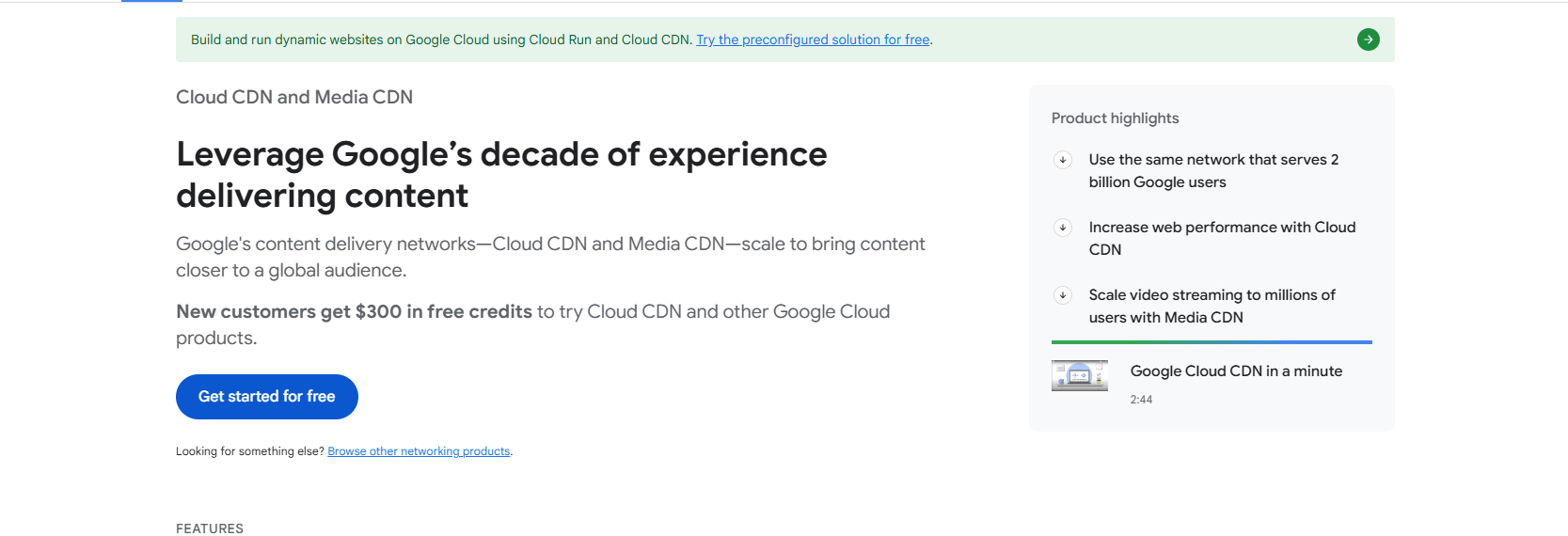
Google's video-optimized delivery runs on the same backbone class that supports YouTube, which gives it high throughput and low latency for global audiences. Media CDN integrates with Google's Live Stream API and monitoring tools, so teams already on Google Cloud get a tight fit. Network stability keeps playback quality high even at peak load.
CDN77
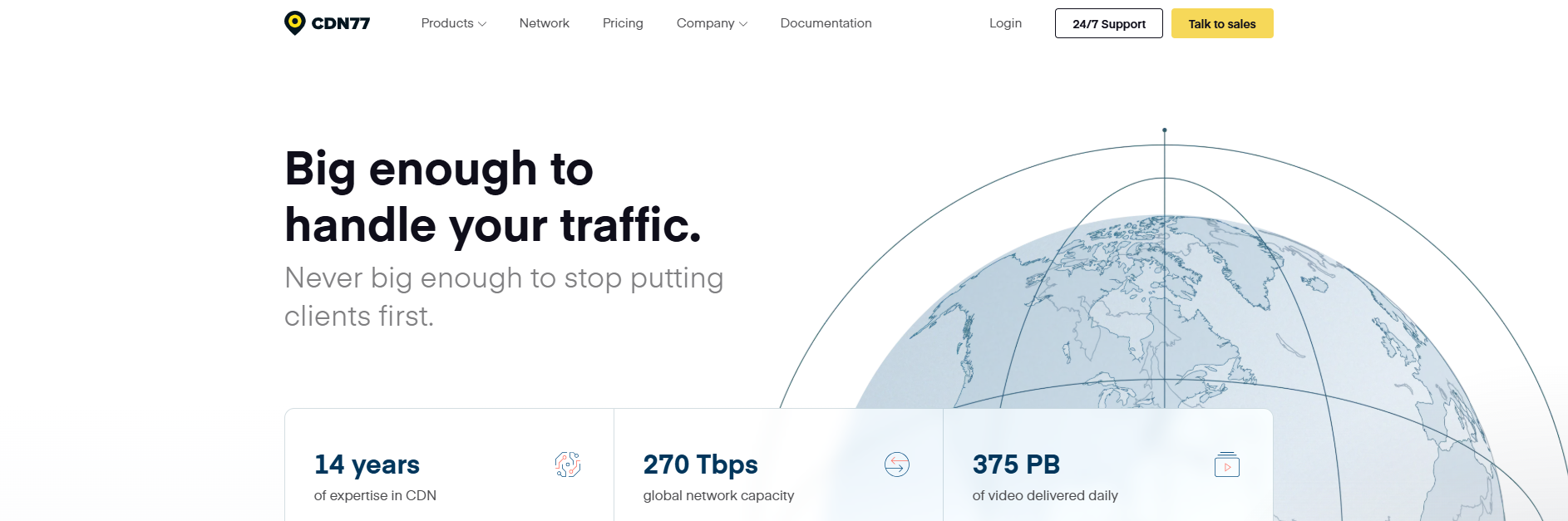
CDN77 is known for handling high-bandwidth live streaming and for being transparent about how it operates. It is often chosen by teams that want fast, reliable delivery at competitive pricing, and its real-time analytics make it straightforward to monitor and adjust performance during a live event.
Why Enterprises Pair CDNs with EnterpriseTube
A CDN delivers your live stream efficiently, but it does not provide the security, governance, or engagement layer enterprises need. That is the job of an enterprise video platform like EnterpriseTube. The CDN handles fast, reliable delivery; EnterpriseTube manages the experience around the stream, from access control and branding to compliance, analytics, and what happens to the recording afterward. Together they form an end-to-end live streaming setup built for how organizations actually work.
Internal events often require strict access policies, data protection, and audit trails. A CDN cannot decide who is allowed to join a stream, and it cannot govern content or manage recordings. EnterpriseTube sits on top of your preferred CDN as the secure video management layer, so your live events stay smooth, safe, compliant, and on-brand.
EnterpriseTube lets you control exactly who can view a live stream using SSO, MFA, and role-based permissions, which a CDN cannot do on its own. It presents the stream in a branded portal with your logo, colors, and layout, plus interactive components such as live chat, Q&A, and moderated comments, and it lets you embed the live stream directly on your website. For compliance, it supports retention policies, audit logs, access history, and secure archiving. Its analytics go deeper than delivery stats to show who joined, how long they stayed, which devices they used, and how they interacted. Once the session ends, EnterpriseTube stores the recording, applies AI indexing, generates transcripts, and prepares the VOD asset for replay, which a CDN is not built to do.
In short, EnterpriseTube covers the gaps a CDN cannot, turning raw delivery infrastructure into a governed, enterprise-ready live streaming solution.
Choosing the Best CDN Provider for Live Video Streaming
Picking the right CDN is a key step in delivering smooth, reliable, secure broadcasts to a global audience. With viewer expectations high, enterprises need a CDN that offers low latency, strong global coverage, and the ability to scale instantly when traffic peaks. Match the provider to your existing stack, your audience locations, and your security requirements, and you have the delivery half of the equation covered.
To see how a live streaming platform built for business pairs with your CDN, try EnterpriseTube for your next broadcast or schedule a personalized demo with our team.

People Also Ask
A CDN for live streaming is a network of edge servers spread across regions that delivers a live broadcast from the server nearest each viewer. Instead of every viewer pulling from one origin, the load spreads across the network, which keeps playback stable when audiences are large or spread across countries.
Live video has to reach viewers in near real time, so any congestion at a single origin server shows up immediately as buffering. A CDN cuts the distance between your video source and each viewer, absorbs sudden traffic spikes, and adjusts quality to each connection. That is what keeps a large live event watchable.
There is no single best option. Akamai and Amazon CloudFront are strong for large global events. Fastly and Cloudflare pair low latency with solid security. Google Cloud Media CDN fits teams already on Google Cloud, and CDN77 works well for high-bandwidth events on a tighter budget. The right pick usually follows your existing infrastructure.
A CDN handles delivery: it moves the video stream to viewers quickly and reliably. A video streaming platform handles everything around the stream, including who can watch, branding, recording, analytics, and compliance. A CDN cannot control access or manage recordings on its own, which is why enterprises run both.
Most video CDNs charge based on usage, usually per gigabyte of data delivered, with rates that vary by region and by any committed volume. Live events with large or global audiences move more data, so cost scales with concurrent viewers and stream quality. Pricing differs widely between providers, so compare egress rates for the regions where your viewers are.
Yes. By serving the stream from an edge location near the viewer and using optimized routing, a CDN lowers the delay between your broadcast and playback. Providers that support low-latency formats such as LL-HLS or low-latency CMAF reduce it further, which matters for interactive formats like live Q&A.
Yes, and this is one of the main reasons to use one. A CDN distributes viewer requests across many edge servers rather than a single origin, so attendance can climb from hundreds to tens of thousands without overloading your source or degrading quality.
For internal or restricted events, usually yes. The CDN delivers the stream fast, while the enterprise video platform controls access, applies branding, records the session, and keeps the audit trail needed for compliance. Together they cover both delivery and governance.
About the Author
Jump to

What Is an eCDN? Enterprise Content Delivery Network for Secure Video Streaming

How to Prevent Live Streaming from Slowing Down


No Comments Yet
Let us know what you think