
by Rafay Muneer, Last updated: March 30, 2026

Every organization creates knowledge every day. Project updates, leadership briefings, technical walkthroughs, customer insights, and compliance discussions often happen over video. Over time, these recordings become one of the largest and least managed sources of organizational knowledge.
The problem starts when video content grows faster than the systems used to manage it. Files end up scattered across shared drives, cloud folders, email links, and personal devices. Employees know the knowledge exists, but they cannot find it when they need it. As a result, teams repeat work, decisions slow down, and valuable insights fade away.
A study by McKinsey shows employees spend close to 19 percent of their work time searching for information. Video intensifies this issue because traditional storage tools do not support search inside spoken content. Without transcripts, metadata, or indexing, videos turn into dark data.
This is where an enterprise video platform for knowledge management becomes relevant. It treats video as a long term knowledge asset rather than a simple file. Instead of storing recordings and forgetting them, organizations can capture, organize, secure, and retrieve knowledge at scale.
If your organization depends on video for communication, collaboration, or expertise sharing, ignoring structured video knowledge management creates hidden costs. The following sections break down clear signs that indicate when an enterprise video platform is no longer optional, but necessary.
Sign 1: Knowledge Is Scattered Across Too Many Systems
One of the earliest and most common signals appears when no one can answer a simple question. Where does our knowledge live?
In many organizations, video content spreads naturally. Town halls sit in collaboration tools. Training recordings live in an LMS. Project walkthroughs stay in shared drives. Expert explanations exist only as meeting recordings stored in personal folders. Each system solves a short-term need, but none provides a unified view of organizational knowledge.
Over time, this fragmentation creates friction. Employees waste time switching tools. Teams recreate content that already exists. New hires receive partial context because key discussions remain hidden in older recordings. Knowledge becomes dependent on who remembers where a video lives.
From an operational standpoint, this also weakens governance. IT teams struggle to enforce access control across multiple platforms. Compliance teams lack visibility into where sensitive discussions are stored. Leaders cannot measure which knowledge assets deliver value.
An enterprise video platform for knowledge management solves this by acting as a central repository for video-based knowledge. It does not replace every tool, but it becomes the system of record for long term knowledge retention. Videos move from scattered storage into a structured, searchable library that reflects how the organization actually works.
When organizations reach a point where knowledge feels everywhere and nowhere at the same time, it is a strong sign that ad hoc video storage has reached its limit.
Sign 2: Employees Spend Too Much Time Searching for Video Knowledge
When video becomes a core communication tool, search turns into a daily problem. Employees know a recording exists, but they do not know where it lives or how to find the exact moment they need.
This shows up in simple ways. People ask colleagues for links. Meetings get re scheduled to repeat explanations. Teams watch entire recordings just to find one answer. Over time, this search overhead turns into lost productivity..
An enterprise video platform for knowledge management changes how search works. AI generated transcripts, timestamps, and metadata make spoken knowledge searchable. Employees find answers in minutes instead of replaying full videos.
When teams complain about not finding videos or waste time rewatching content, search has become a bottleneck rather than a support function.
Sign 3: Critical Knowledge Walks Out the Door With Employees
Every organization depends on people who carry deep operational knowledge. They understand why decisions were made, how systems evolved, and where risks tend to appear. When they leave, that knowledge often leaves with them.
This risk grows when expertise lives mainly in conversations and meetings. Project reviews, technical walkthroughs, and problem solving sessions happen over video, but the recordings remain unstructured and rarely reused. New employees inherit outcomes without the reasoning behind them.
The impact shows up slowly. Teams rely on a small group of long tenured employees for answers. Onboarding takes longer. Mistakes repeat because lessons learned remain locked inside past discussions.
An enterprise video platform for knowledge management captures expert knowledge in a form that survives role changes. Recorded explanations become searchable assets, not forgotten files. Over time, organizations build a living knowledge base that reduces dependency on individuals.
When turnover creates knowledge gaps and slows teams, it signals that video based expertise needs structure and long term retention.
Sign 4: Video Content Creates Security and Compliance Blind Spots
As video usage grows, security risks often stay hidden until an issue appears. Sensitive discussions, regulatory briefings, and internal reviews end up stored in tools designed for convenience rather than governance.
This creates blind spots. Access permissions remain inconsistent. Audit trails do not exist or remain incomplete. Compliance teams struggle to confirm who viewed, shared, or downloaded a recording. In regulated industries, this exposure increases legal and operational risk.
The challenge comes from using general purpose storage for enterprise knowledge. These tools store files, but they do not enforce policy across the video lifecycle. Retention rules, access control, and review workflows remain manual.
An enterprise video platform for knowledge management applies governance by design. Role based access, encryption, audit logs, and retention policies protect sensitive knowledge without slowing access for authorized users.
When security teams lack visibility into video content or compliance reviews rely on manual checks, video knowledge management has outgrown consumer grade tools.
Sign 5: Knowledge Sharing Depends on Repeating Live Meetings
When knowledge stays locked in live meetings, organizations pay a quiet productivity tax. The same explanations happen again and again because earlier discussions remain hard to reuse.
This pattern becomes visible when teams schedule sessions simply to transfer context. Employees miss meetings due to time zones or conflicts, then ask for separate walkthroughs. Recordings exist, but no one revisits them because they are hard to search or navigate.
Live meetings work for collaboration, not long term knowledge retention. Without structure, recorded sessions turn into archives that few people explore. Knowledge transfer stays reactive instead of on demand.
An enterprise video platform for knowledge management turns meeting recordings into reusable assets. Transcripts, chapters, and search allow employees to access specific insights without replaying entire sessions.
When calendars fill with repeat meetings meant to explain past work, it signals that knowledge sharing needs a system designed for reuse, not repetition.
Sign 6: Video Content Grows Faster Than Your Ability to Manage It
At an early stage, teams manage video informally. File names, folders, and memory are enough. As video volume increases, this approach breaks down.
The symptoms appear quickly. No consistent tagging or categorization exists. Older recordings become hard to archive or retire. Storage costs rise without clear visibility into what still delivers value. Teams hesitate to delete content because they are unsure what remains useful.
This growth creates noise. Important knowledge hides among outdated or duplicate videos. New content adds to the clutter instead of improving clarity.
An enterprise video platform introduces structure at scale. Libraries, metadata, lifecycle rules, and retention policies keep knowledge organized as volume grows. Video remains accessible without becoming overwhelming.
When managing video feels reactive and unsustainable, scale has exceeded the limits of manual organization.
Sign 7: Leaders Lack Visibility Into How Knowledge Is Used
As video becomes a primary knowledge source, leaders need insight into what actually helps teams. Many organizations lack this visibility.
The gap shows up when questions go unanswered. Which videos do employees rely on? Which topics drive engagement? Where do knowledge gaps still exist? Without data, decisions rely on assumptions rather than evidence.
This also affects improvement efforts. Teams create more content without knowing what gets used. Valuable expertise may exist, but no one can measure its impact or identify what needs updating.
An enterprise video platform for knowledge management provides analytics on views, search behavior, and engagement. These signals show which knowledge assets support daily work and where new content is needed.
When leadership cannot measure the value of video based knowledge, knowledge management remains reactive instead of strategic.
Why These Signs Point to the Same Root Problem
Each of these signs looks separate on the surface. Scattered storage, slow search, knowledge loss, compliance gaps, repeated meetings, content sprawl, and limited visibility often get treated as isolated issues.
In practice, they share the same root problem. Video has become a core knowledge format, but most organizations still manage it like a static file or a temporary recording. The systems in place were never designed to preserve, govern, and surface video based knowledge over time.
This gap creates hidden costs. Productivity drops as employees search or repeat work. Risk increases as sensitive content spreads without oversight. Expertise erodes as people leave and context disappears. Leaders struggle to improve what they cannot measure.
An enterprise video platform for knowledge management addresses the problem at its source. It treats video as institutional knowledge from the moment it is created. Content gets captured with context, organized with structure, secured with policy, and made discoverable through search.
Organizations usually recognize this need after friction accumulates across teams. At that point, the goal is not adding another tool. It is restoring control over knowledge that already exists and continues to grow.
When an Enterprise Video Platform Becomes Necessary
Most organizations do not set out to build a video driven knowledge base. It happens gradually as meetings, explanations, and decisions move to video. Over time, the volume grows, the structure breaks down, and access to knowledge becomes inconsistent.
The signs appear in daily work. Employees search longer than they should. Experts repeat the same explanations. Important context disappears when people leave. Security and compliance teams lack visibility into where sensitive knowledge lives. Leaders struggle to measure which content supports real work.
An enterprise video platform for knowledge management addresses these issues by design. It centralizes video knowledge, applies governance, and makes spoken information searchable and reusable. Instead of treating video as a byproduct of meetings, organizations turn it into a long term asset.
When video becomes essential to how knowledge flows across teams, managing it informally creates friction and risk. At that stage, adopting an enterprise video platform is not about adding technology. It is about protecting, preserving, and scaling organizational knowledge.

Key Takeaways
-
Video has become a primary source of organizational knowledge, yet most systems still treat it as a temporary recording.
-
Scattered storage across tools makes knowledge hard to find, reuse, and govern.
-
Slow search inside video leads to lost productivity and repeated work.
-
Unstructured recordings increase the risk of knowledge loss during employee turnover.
-
Security and compliance gaps emerge when sensitive video lives outside governed systems.
-
Repeated meetings often signal poor reuse of existing video knowledge.
-
Growing video volume requires structure, lifecycle control, and visibility.
-
An enterprise video platform for knowledge management turns video into a searchable, secure, and reusable knowledge asset.
About the Author
Jump to
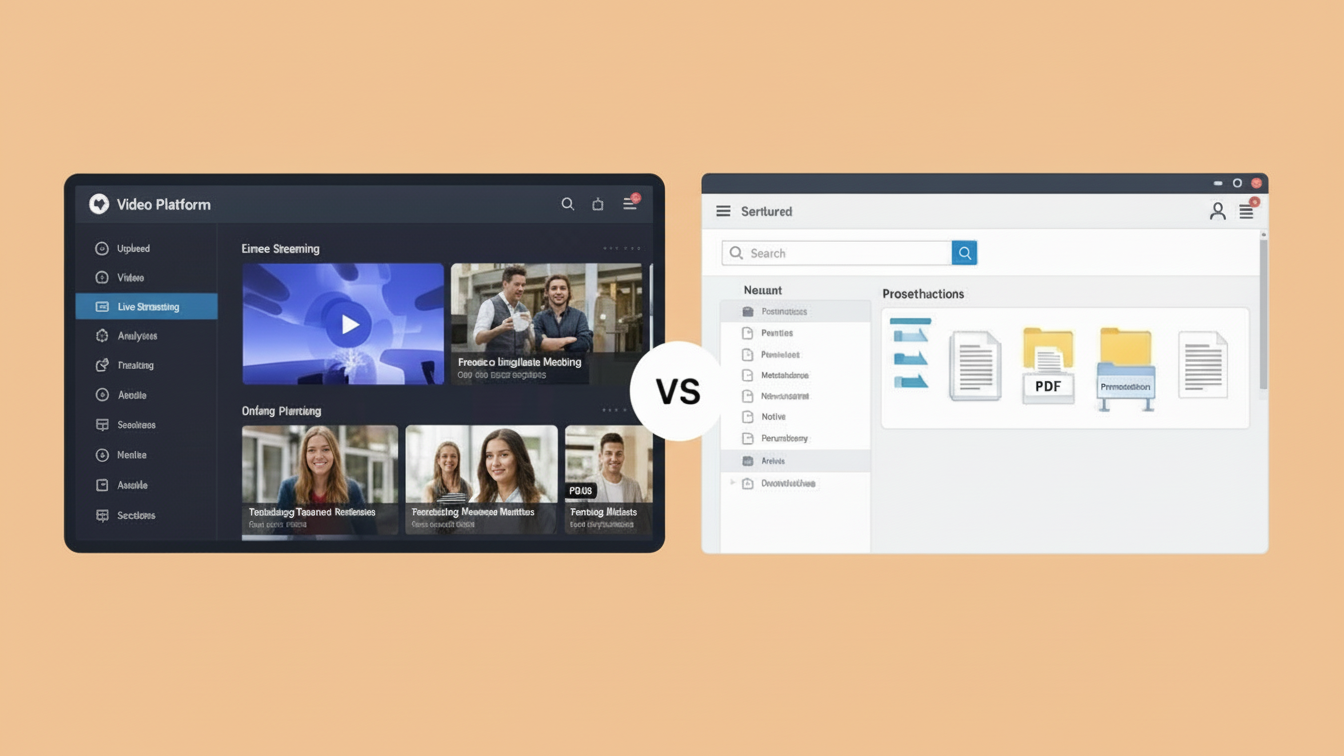
Enterprise Video Platforms vs Knowledge Management Systems: What's the Difference?

Enterprise Video Platform Requirements Enterprises Miss During RFPs And Why They Matter


No Comments Yet
Let us know what you think