
by Shah Noor Ahmed Baig, Last updated: July 16, 2026
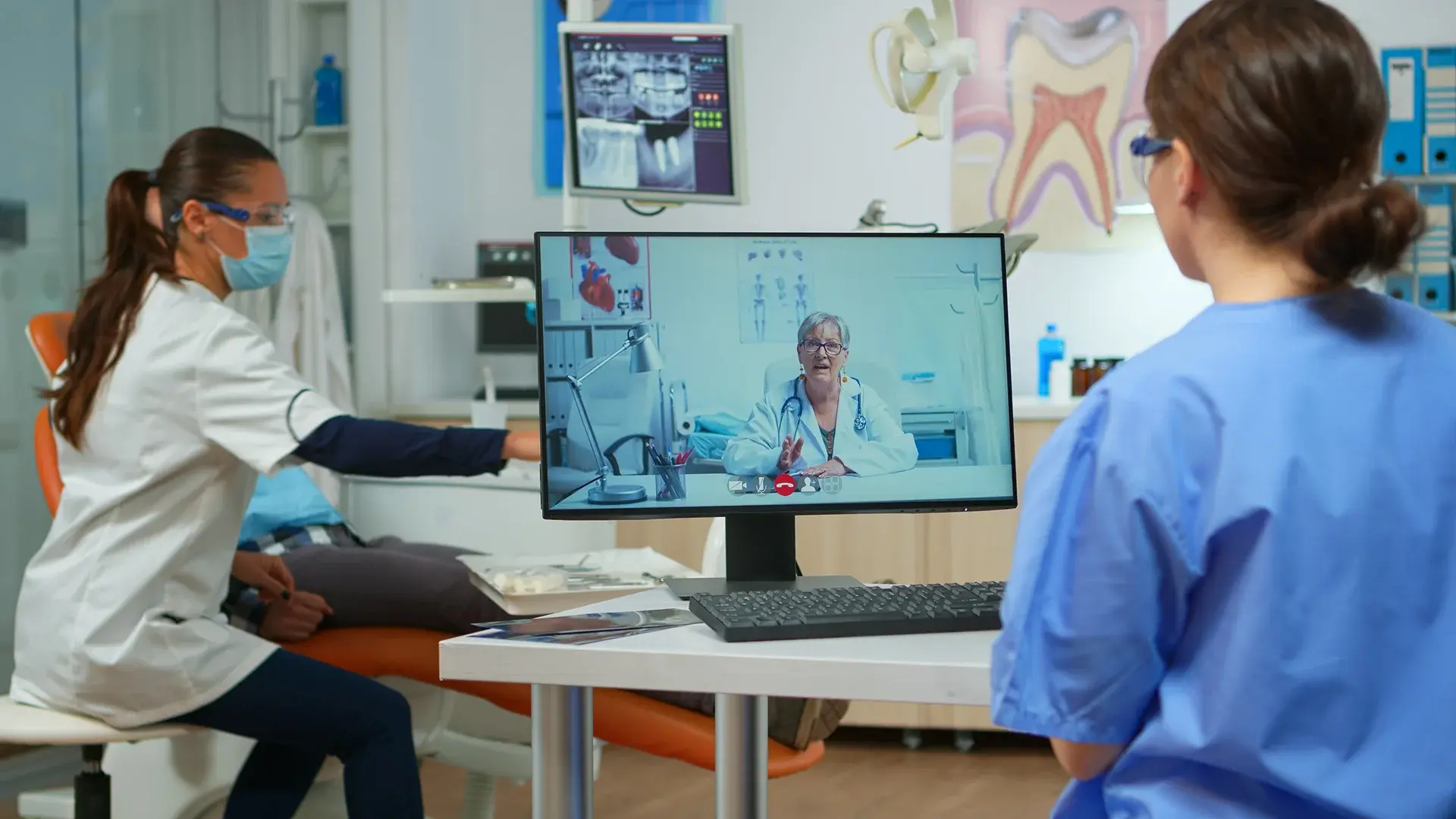
Healthcare providers rely on video more than ever, whether for telehealth visits, patient education, internal training, or multidisciplinary collaboration. But standard video tools like Zoom Basic, Google Meet, or YouTube don’t meet HIPAA requirements. They store data in non-compliant clouds, track user behavior, or lack the safeguards needed to protect PHI.
These HIPAA-compliant tools also function as healthcare video platforms, supporting secure telehealth, patient education, medical training, and internal collaboration across healthcare organizations.
This has pushed hospitals, clinics, behavioral health practices, and specialty care providers to adopt HIPAA-compliant video platforms that offer encryption, access governance, BAAs, and secure storage. Below, we break down the nine best options trusted across the healthcare industry today.
Key Takeaways
-
HIPAA compliance requires encrypted video, secure storage, audit logs, and BAAs.
-
Not all video tools qualify since consumer apps can expose PHI.
-
EnterpriseTube offers the most complete mix of secure live + on-demand video for healthcare.
-
Large systems should prioritize governance, scalability, and lifecycle control over PHI content.
What Makes a Healthcare Video Platform HIPAA-Compliant?
A platform qualifies as HIPAA-compliant only when it includes the required administrative, physical, and technical safeguards to securely handle PHI. These typically include end-to-end encryption, access control, secure storage, audit logs, and a formal Business Associate Agreement (BAA).
Healthcare organizations also need platforms that prevent unauthorized access, enforce role-based permissions, provide activity tracking, and store all content in compliant data centers. Without these capabilities, a provider risks data breaches, penalties, and compromised patient trust.
How HIPAA-Compliant Tools Fit into Healthcare Video Platforms?
In healthcare, a video platform must meet strict regulatory and security standards. That’s why HIPAA compliance is not optional, it’s a foundational requirement of any healthcare video platform used for clinical care, education, or collaboration. Platforms that lack encryption, access controls, or BAAs cannot safely support healthcare workflows involving PHI.
The 9 Best HIPAA-Compliant Video Platforms for Healthcare Providers
Below are the most reliable HIPAA-ready platforms supporting secure telehealth, patient communication, and medical collaboration.
1. Zoom for Healthcare
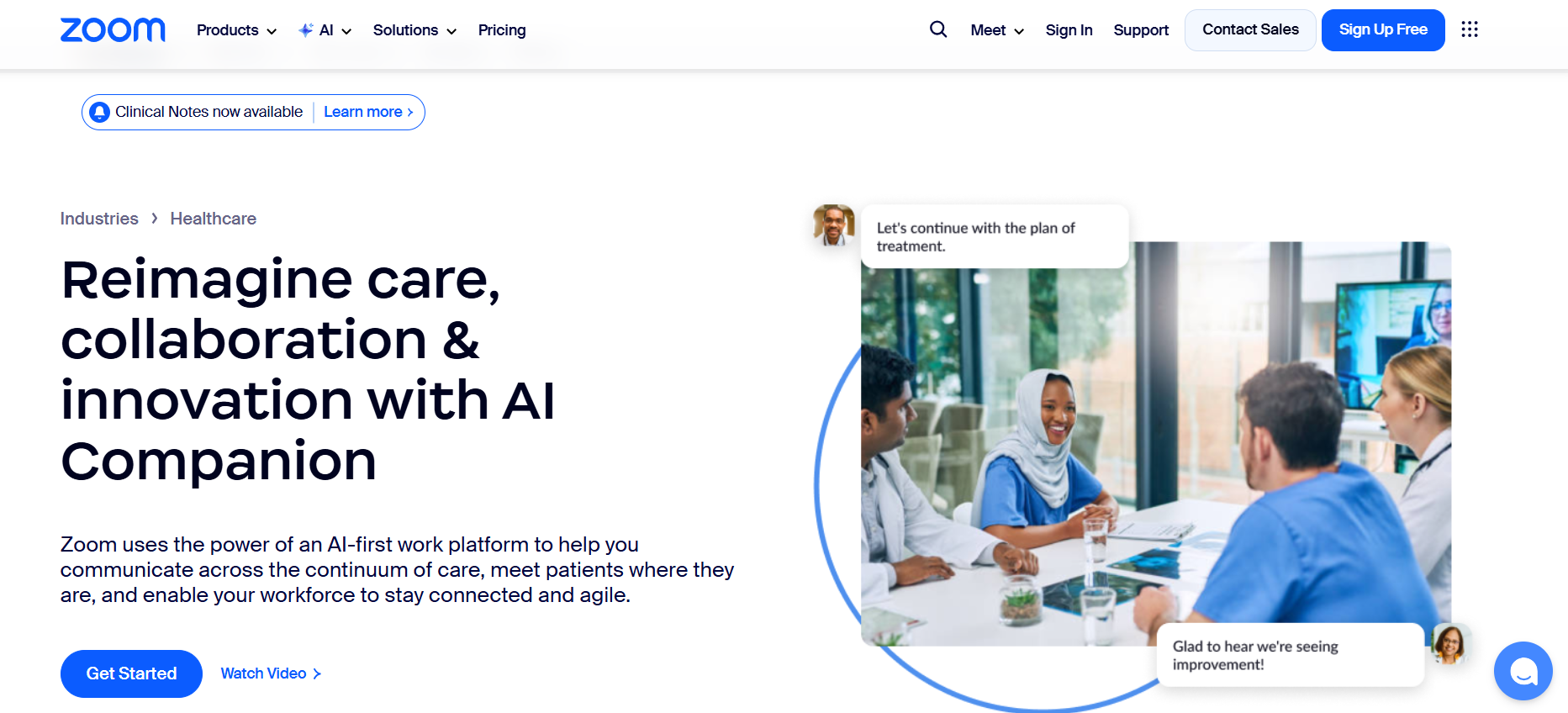
Zoom for Healthcare is a dedicated version of Zoom built to support HIPAA-compliant virtual care. It includes enhanced encryption, controlled data routing, and privacy protections that aren’t available in the standard version
Hospitals and clinics use it for telehealth visits, multidisciplinary consultations, and remote patient check-ins, benefiting from its familiarity and ease of use.
Beyond its secure video calls, Zoom for Healthcare integrates with EHR systems like Epic, enabling a smoother clinical workflow. The platform also supports virtual waiting rooms, patient notifications, and detailed admin controls.
With a BAA included, it remains a popular option for healthcare organizations transitioning from consumer video tools to compliant video infrastructure.
2. Doxy.me

Doxy.me is one of the most widely used telehealth platforms for smaller clinics and solo practices needing a simple HIPAA-compliant video solution. Its browser-based experience removes the need for patient downloads or logins, reducing barriers to care and allowing providers to start secure virtual visits quickly. The interface is clean, intuitive, and tailored for clinical workflows.
In addition to encrypted video sessions, Doxy.me provides virtual waiting rooms, customizable branding, and patient queuing features. Because no PHI is stored on their servers, providers benefit from a reduced compliance footprint. Combined with available BAAs and affordable paid tiers, Doxy.me is a strong choice for practices wanting a lightweight, low-friction telehealth platform.
3. VSee
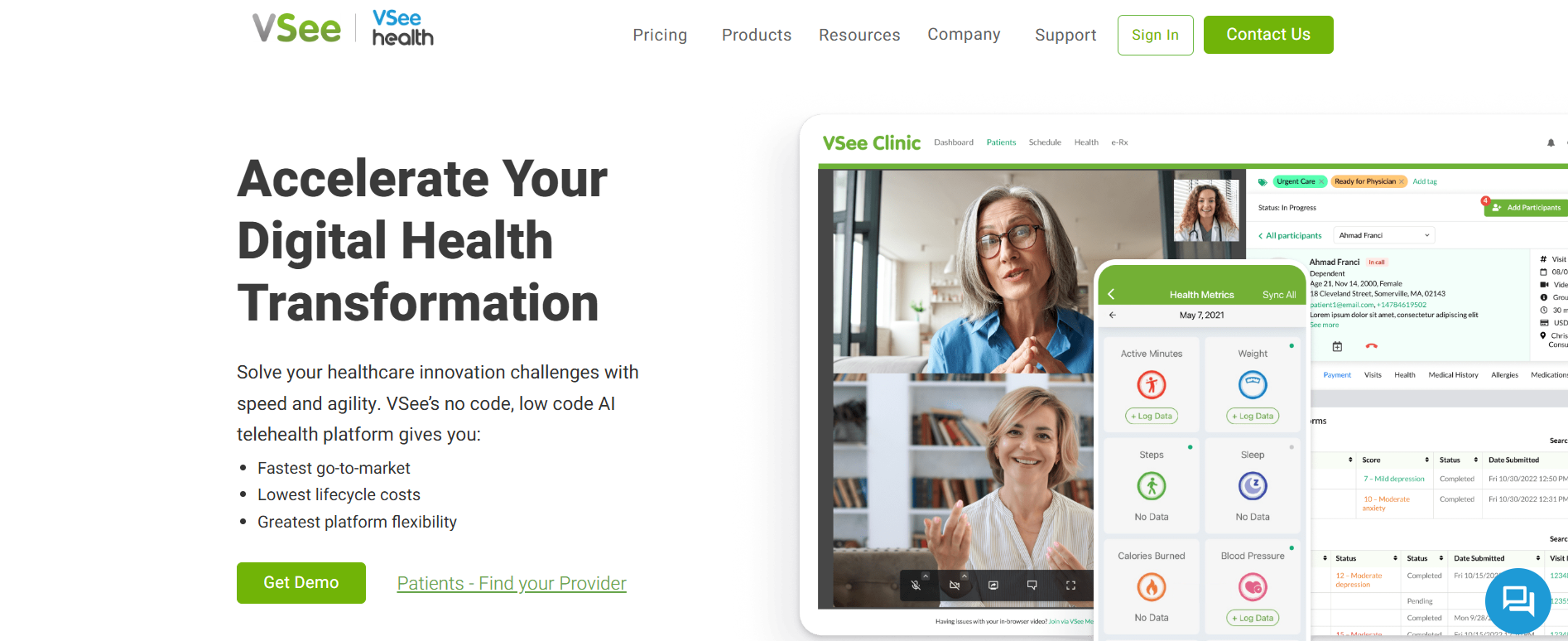
VSee is a telehealth platform designed for clinical teams needing secure video consultations, digital intake, and virtual waiting room workflows. Its HIPAA-compliant architecture supports encrypted communication and controlled access, making it safe for handling PHI in urgent care centers, specialty clinics, and rural telemedicine programs.
VSee’s customizable interface allows organizations to tailor pathways for different departments.
Beyond video visits, VSee offers patient self-scheduling, form submissions, file sharing, and integrations with EHR systems. Healthcare organizations appreciate its flexibility in building custom telehealth hubs, remote diagnostic workflows, or hybrid in-clinic/virtual care models.
With a BAA and encrypted infrastructure, it remains popular among mid-sized providers and telemedicine networks.
4. SecureVideo
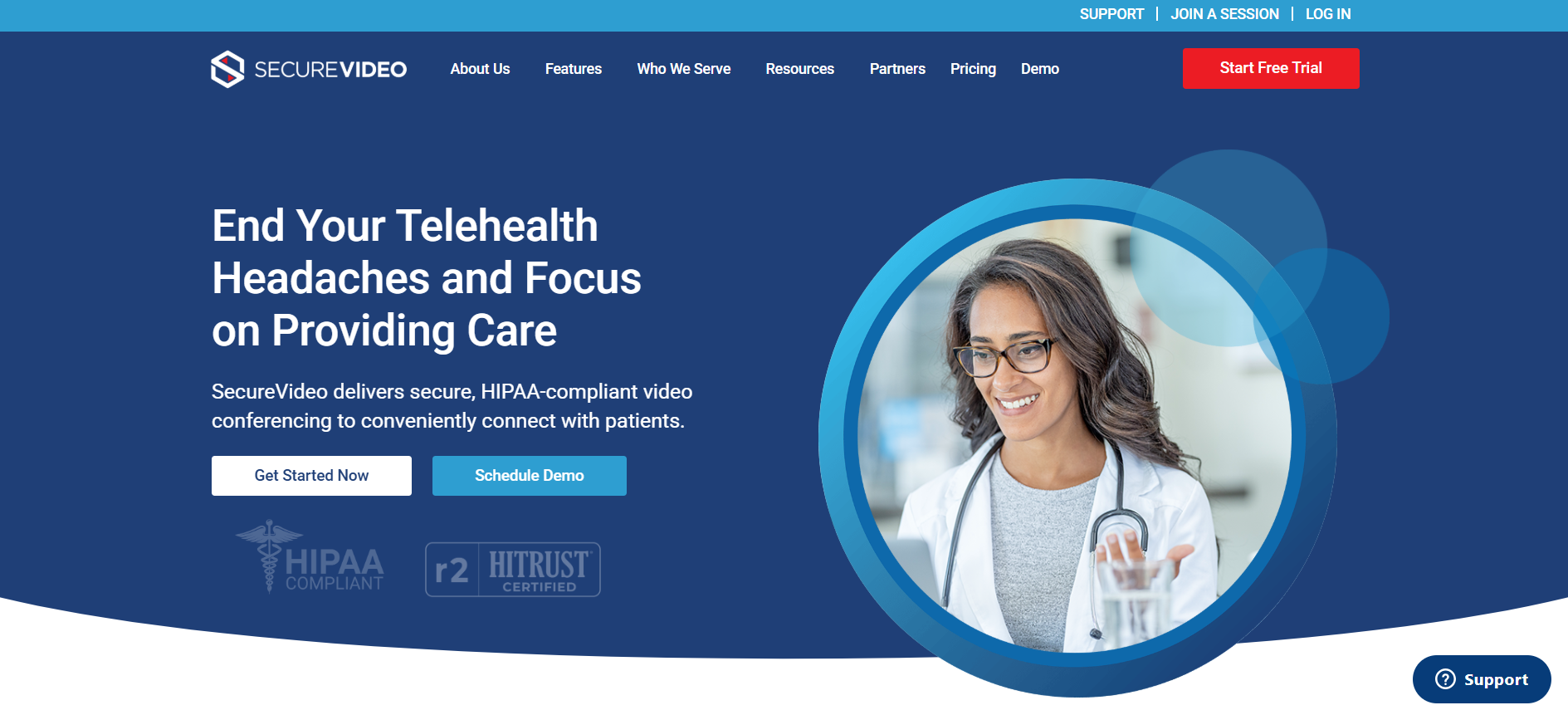
SecureVideo is a video conferencing platform purpose-built for medical practices, behavioral health providers, and therapy groups requiring HIPAA-compliant video. The platform supports encrypted sessions, BAA-backed data protection, and user authentication tools that ensure safe patient interactions.
Clinics can manage provider schedules, automate session links, and create structured virtual appointment workflows.
Its administrative dashboard gives healthcare staff visibility into session history, patient access, and quality metrics. SecureVideo also includes waiting rooms, provider handoff options, and EHR-friendly scheduling. Many practices adopt it for its reliability, dedicated healthcare focus, and strong support ecosystem designed specifically for telehealth operations.
5. Doximity Dialer Video
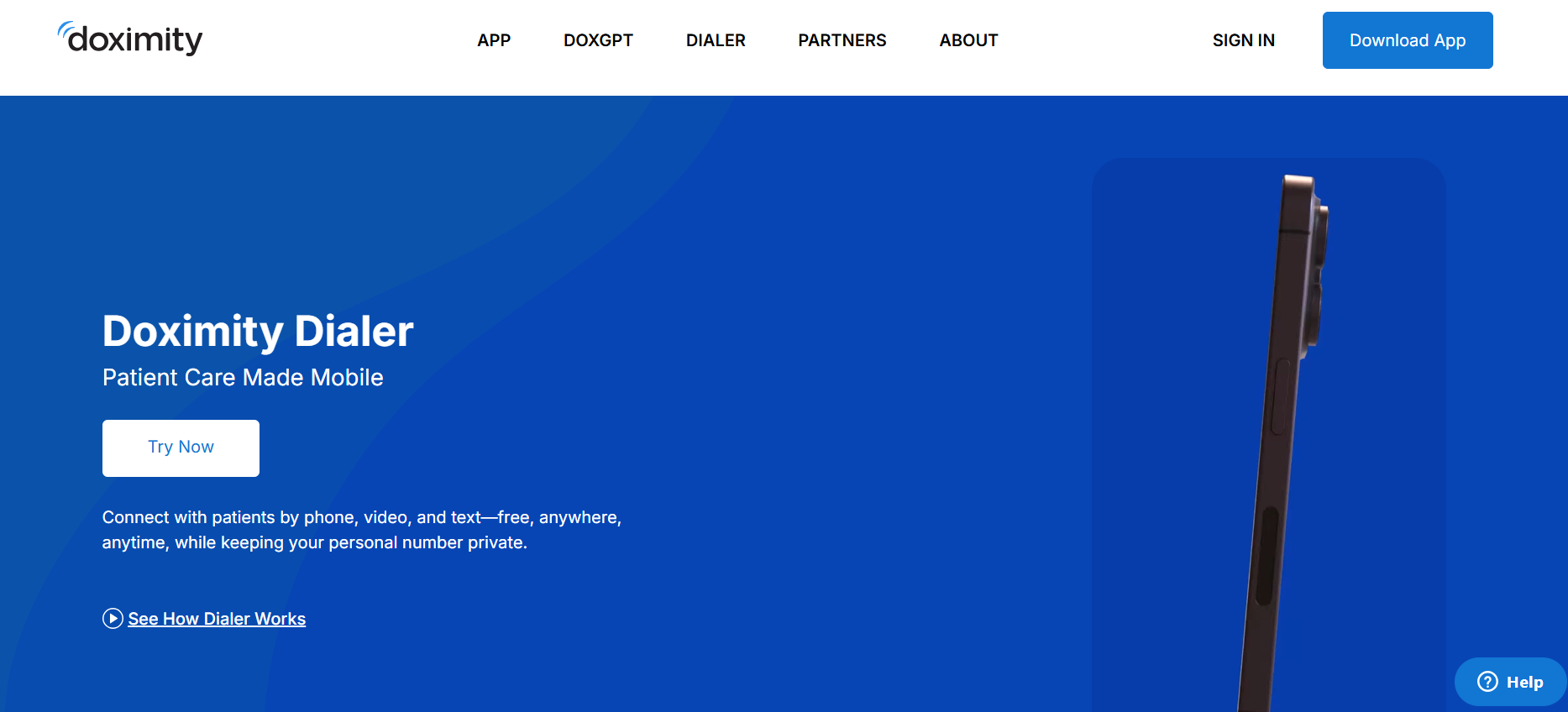
Doximity Dialer Video offers an ultra-simple, HIPAA-compliant way for physicians to conduct secure video visits directly from their smartphones. Providers can send a one-tap video link to patients via text without requiring any downloads or complicated login steps. This ease of access is especially valuable for elderly patients or those unfamiliar with telehealth apps.
The platform ensures encrypted sessions and PHI-safe communication, supported by a BAA for healthcare organizations. Physicians also benefit from professional caller ID masking, secure messaging, and an interface integrated with the broader Doximity network. Dialer Video is ideal for mobile-first care environments and fast virtual follow-ups.
6. Thera-LINK
Thera-LINK is designed for mental health professionals who need a HIPAA-compliant video platform tailored to therapy workflows. It offers secure video sessions, scheduling tools, client payment options, and private messaging features, making it ideal for counselors, psychologists, and therapy groups. Its interface is patient-friendly and centered around consistent, confidential care.
Thera-LINK also includes session notes, client management tools, and customizable waiting rooms. Providers appreciate its focus on behavioral health, where trust and privacy are critical. With encrypted video calls, a BAA, and PHI-safe data handling, it provides a compliant and comfortable environment for virtual therapy.
7. Mend
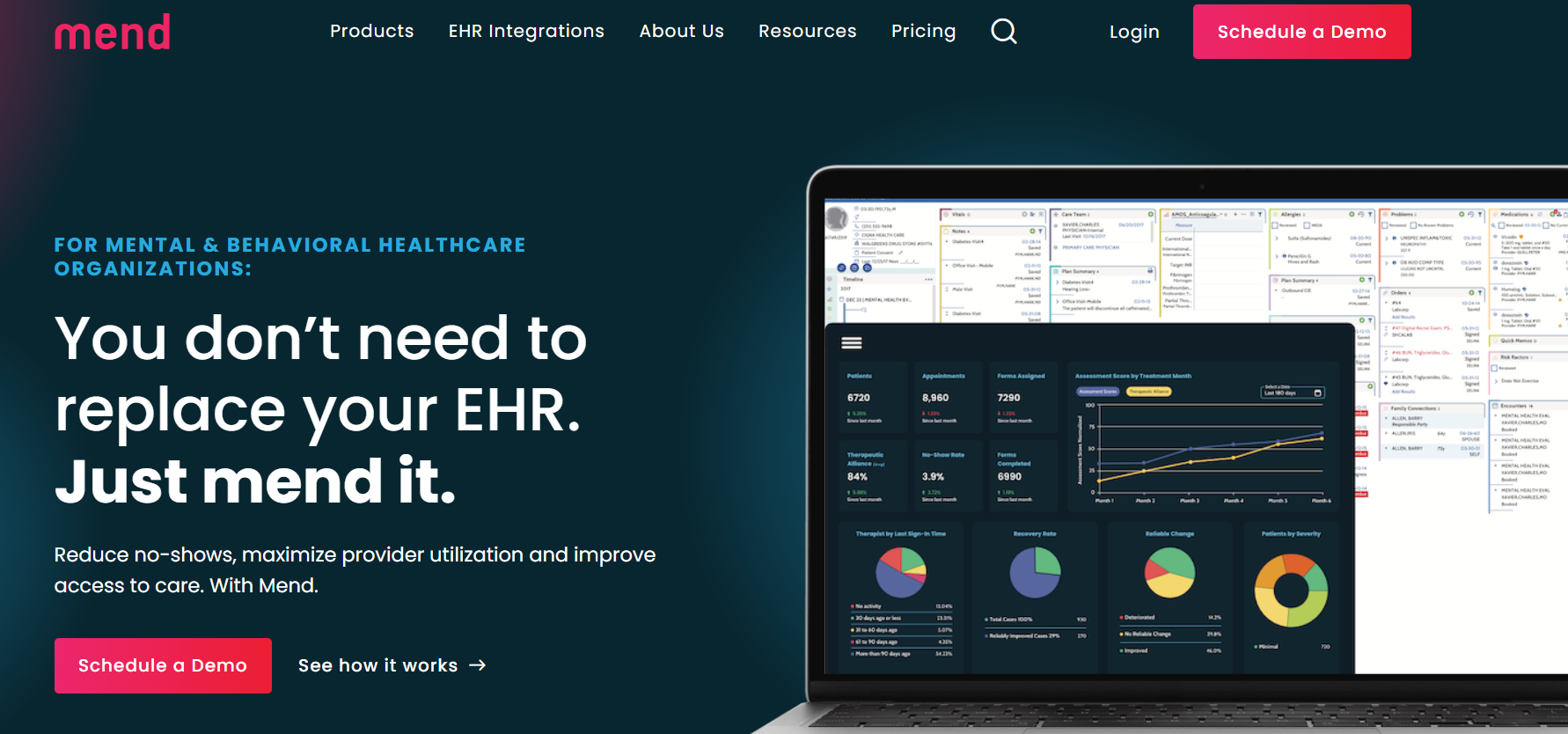
Mend is a high-performance telehealth and patient engagement platform built for large clinics and health networks. It supports HIPAA-compliant video sessions, automated reminders, digital intake forms, and secure messaging. Its infrastructure is designed to handle high visit volumes, making it well-suited for enterprise-level virtual care operations.
Beyond video, Mend offers predictive analytics to reduce no-shows, integrated scheduling, and full EHR connectivity. Its automated workflows streamline administrative tasks for clinicians and staff. With encrypted communication, BAA support, and governed access, Mend is a strong fit for multi-site organizations seeking an all-in-one solution.
8. Spruce Health
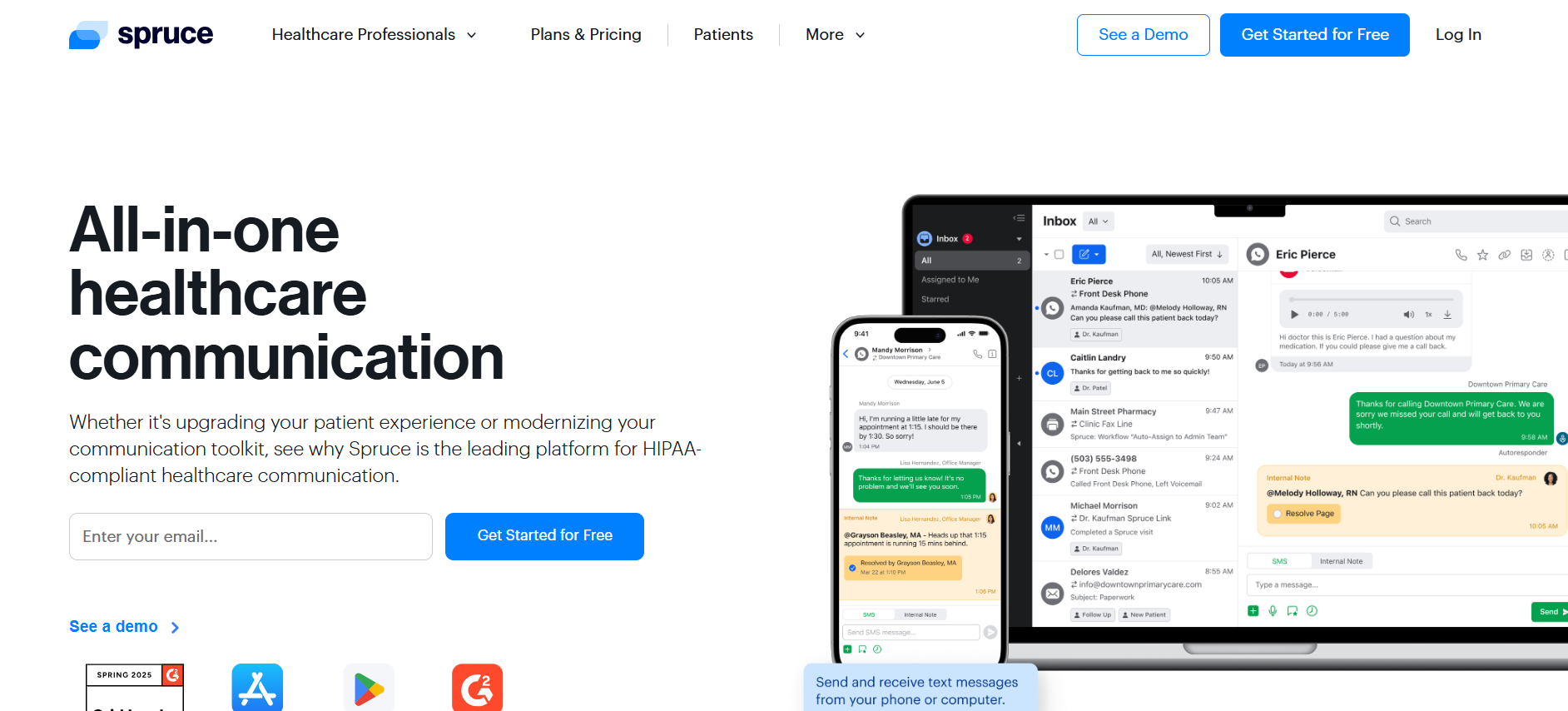
Spruce Health provides a unified communication platform offering HIPAA-compliant video visits, secure messaging, and care team collaboration. It is frequently used by hybrid and virtual-first clinics that require a single system for patient communication across multiple channels. Its mobile-friendly interface makes accessing care simple for both patients and providers.
The platform includes encrypted video, phone calling, clinical inboxes, task routing, and provider-to-provider communication tools. Spruce also signs BAAs, maintains secure data storage, and supports team-based care models. Its flexibility makes it useful for practices needing a combined telehealth and secure communication environment.
9. EnterpriseTube
EnterpriseTube is built for healthcare organizations needing HIPAA-compliant healthcare video platform for telehealth recordings, medical training, and patient education. It provides encrypted live and on-demand video, PHI-safe storage, detailed audit logs, SSO/MFA, and granular access controls.
Hospitals and clinics can use it to centralize secure medical videos in private cloud or on-prem environments configured for HIPAA alignment.
The platform also supports role-based permissions, retention policies, analytics, and customizable healthcare portals. EnterpriseTube’s governance capabilities make it ideal for large systems managing sensitive content such as surgery recordings, telehealth session archives, clinical onboarding videos, and compliance documentation.
With a BAA available under approved deployments, it offers end-to-end lifecycle control for all healthcare video workflows. To explore how EnterpriseTube supports HIPAA-compliant video workflows, you can book a free trial and see the platform in action for your healthcare use cases.
How to Choose the Right HIPAA-Compliant Healthcare Video Platform
Selecting the right HIPAA-safe video tool depends on your organization's size, workflows, and PHI requirements. Clinics conducting simple video visits may prefer lightweight platforms like Doxy.me or Doximity. Larger health systems needing secure video libraries, training, compliance records, and governance benefit from enterprise-level platforms like EnterpriseTube.
Healthcare leaders should also evaluate EHR integrations, patient accessibility, security controls, storage needs, and long-term compliance requirements. The goal is not just running virtual visits—it’s ensuring every piece of PHI remains protected throughout the video lifecycle.
People Also Ask
A HIPAA-compliant video platform must protect PHI under the Privacy and Security Rules. This includes encryption (AES-256 at rest, TLS 1.3 in transit), strong access controls (RBAC, SSO, MFA), audit logging, breach notification procedures, and a signed Business Associate Agreement (BAA). Technical safeguards alone aren’t enough, legal and organizational controls are also required.
Not by default. Only Zoom for Healthcare (enterprise tier) can be configured for HIPAA compliance with a signed BAA and proper settings. The free version is never compliant. Even with a BAA, features must be correctly configured. Zoom is built for conferencing, not secure clinical video storage or management.
A BAA (Business Associate Agreement) is a required contract between a healthcare provider and any vendor that handles PHI. If a video tool records, stores, processes, or transcribes PHI, you need a BAA. A signed BAA is necessary but alone does not guarantee compliance.
Yes. Recorded consultations, exams, and case discussions are PHI because they contain identifiable health information. They must be stored on a HIPAA-compliant platform with restricted access, audit logs, and proper retention policies.
No. YouTube will not sign a BAA and uses viewer data for advertising and analytics. It’s unsuitable for any video containing PHI. Healthcare organizations should use a HIPAA-compliant platform with private access controls and no third-party tracking.
HIPAA requires “reasonable and appropriate” safeguards. Industry standard is AES-256 encryption at rest and TLS 1.3 in transit, with secure key management. Storing recordings on unencrypted devices or personal storage is a violation.
While not explicitly named in HIPAA, SSO and MFA are considered essential for protecting PHI. They ensure centralized access control, automatic deprovisioning, and protection against credential compromise.
HIPAA penalties range from $100 to $50,000 per violation (up to $1.9M per year), depending on severity. Violations can also lead to corrective action plans, reputational damage, and civil lawsuits.
Yes, if the AI vendor signs a BAA, processes data within a compliant environment, and does not train on your patient data. Transcripts are also PHI and must be stored securely.
Both can be compliant. Cloud offers faster deployment and lower cost; on-premises provides maximum data control. The right choice depends on your IT resources, risk tolerance, and data residency requirements.
About the Author

Jump to

Top Secure Healthcare Video Hosting Platforms for HIPAA-Compliant Streaming

Secure Video Hosting: How to Protect Corporate Content in 2026


No Comments Yet
Let us know what you think